HomeGuidesPressure Vessel Inspection Guide

Pressure Vessel Inspection: A Guide for Owners

What periodic inspection of a pressure vessel involves, what an inspector looks for, and how the way a vessel is designed and built makes every inspection easier.

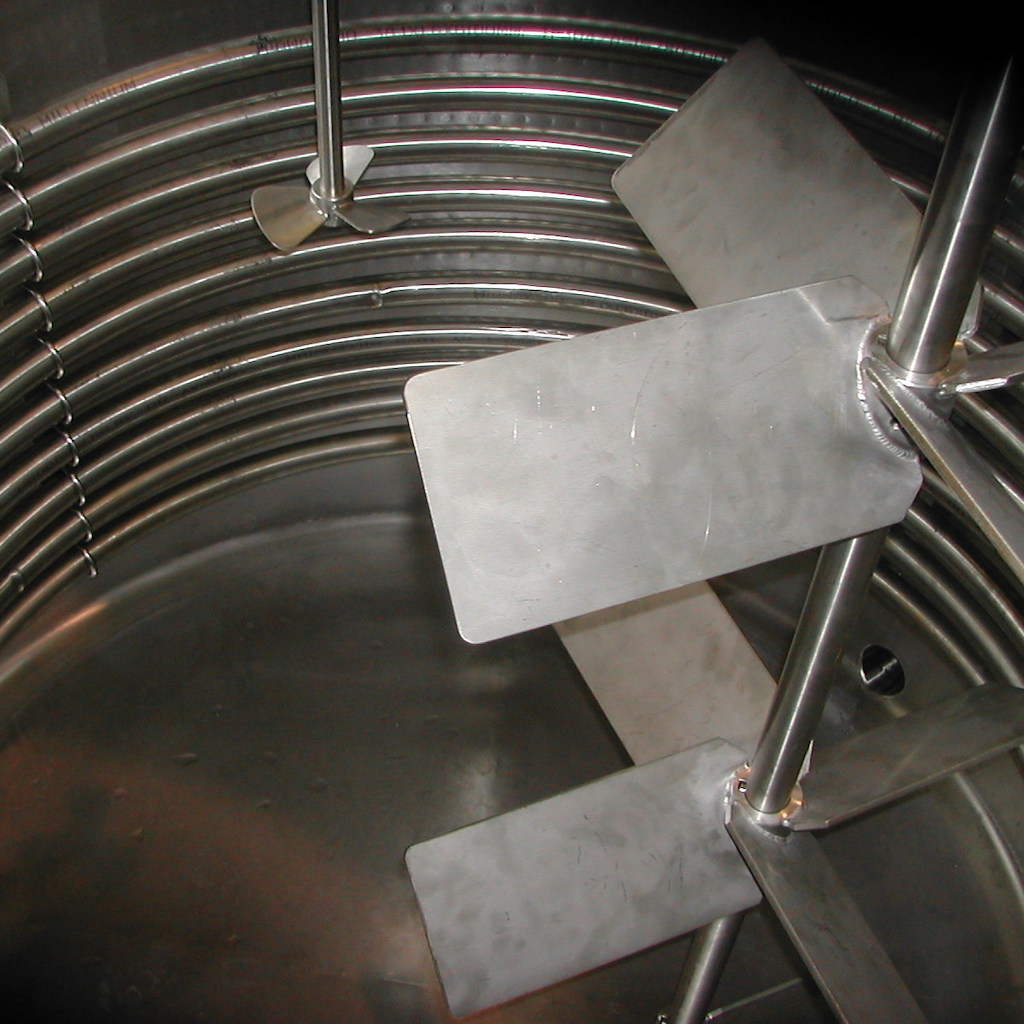
Inside a stainless steel dairy tank, showing the polished shell and welds
ASSDA accreditedSince 1996 · built and tested in our Brisbane workshop

What In-Service Inspection Is

A pressure vessel is tested before it leaves the workshop. That proves it was built right. It does not prove it stays right. Once a vessel is in use, heat, pressure, product, cleaning chemicals and time all take a toll.

In-service inspection is the planned, periodic check of a vessel while it is in use. A competent inspector looks at its condition, compares it with the records, and decides whether it is safe to keep running until the next inspection.

A failed pressure vessel can hurt people and wreck a plant. Owners have legal duties to keep pressure equipment safe. Small problems found early are far cheaper to fix than a leak, a lost batch or an unplanned shutdown.

This guide is a plain-English summary for plant owners and engineers. It does not replace the standards, your state regulator’s guidance or advice from a competent inspector.

Periodic Inspection Under AS/NZS 3788

AS/NZS 3788 is the Australian and New Zealand standard for in-service inspection of pressure equipment. It covers inspection from commissioning through to disposal, and how repairs, alterations and re-rating are carried out.

The standard sets typical inspection intervals for different types of equipment, and allows them to be extended or shortened where a documented risk-based assessment supports it. Your inspector sets the plan for each vessel.

Who may carry out the inspection depends on the vessel and where it is installed. It is generally a competent person with the right qualifications and experience. Depending on the hazard level, the standard and your state’s rules, some vessels need an inspector from an accredited inspection body.

Hazard level also matters. Under AS 4343, vessels are rated from hazard level A (highest) to E (negligible). Under the model WHS regulations, vessels of hazard level A, B or C generally need plant item registration with the state or territory regulator, and the application includes a statement that a competent person has inspected the vessel and found it safe to operate. Victoria has its own regulations, so the detail differs there.

Insurers can have their own requirements on top of the regulator’s. Check the current standard, your state’s rules and your policy, rather than relying on a rule of thumb.

What Inspectors Look For

Inspection plans differ, but most cover the same ground. This is a general summary of what an inspector checks on a stainless pressure vessel.

Corrosion and Pitting

General corrosion, pitting and crevice corrosion on the shell, heads and internals, often worst where product or cleaning chemicals sit.

Cracking at Welds

Cracks at welds, nozzles and attachments, including stress corrosion cracking where chlorides and heat combine.

Wall Thickness

Thickness readings compared with the design and earlier readings, to see whether metal is being lost over time.

Jacket Condition

Jacket welds, connections and signs of leaks between the jacket and the inner vessel, plus insulation and cladding damage.

Safety Valves and Fittings

Safety valves, bursting discs, gauges and other protective devices in place, set correctly and in date for testing or servicing under the inspection plan.

Nameplate and Records

The nameplate is present and legible, and matches the registration, drawings and data report. Supports, anchors and foundations are checked too.

Designing for Inspection

Inspection access is set at the design stage. A vessel that is hard to get into, or hard to see inside, costs more to inspect for its whole life and is more likely to have problems missed.

Good design gives the inspector access. That means manways or inspection openings that suit the vessel’s size and use, nozzles placed where they can be looked at, and internals that can be seen or removed. AS 1210 sets requirements for inspection openings based on the vessel’s size and service. Smooth, drainable internal surfaces and well-finished welds also make defects easier to spot.

We design pressure vessels to AS 1210 in house, and every design is verified by a third-party RPEQ. If you know who will inspect the vessel, bring them into the design review so access suits the way they work.

  • Manways and inspection openings sized for the vessel
  • Nozzles and attachments placed so they can be checked
  • Drainable internals with no hidden dead spots
  • Food-grade 0.6 µm Ra finish where the duty calls for it
  • AS 1210 design in house, verified by a third-party RPEQ
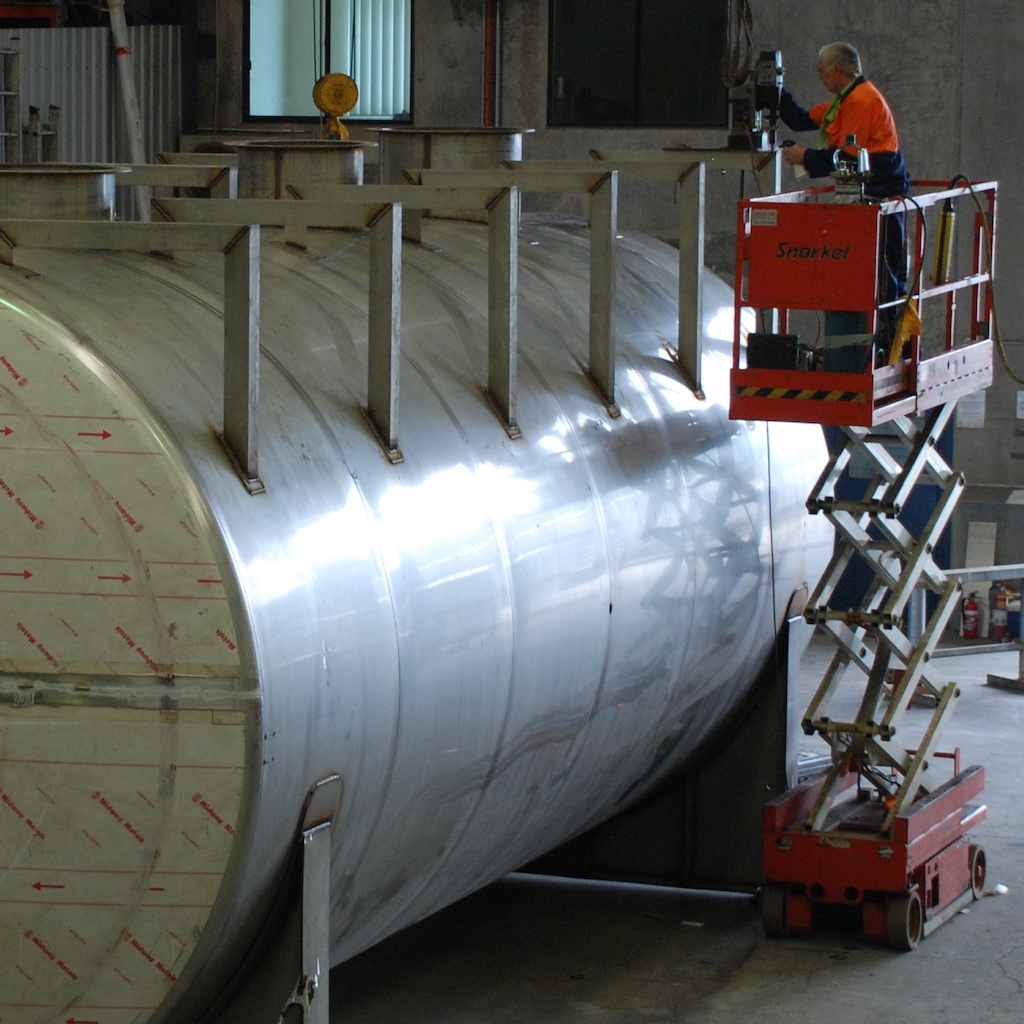
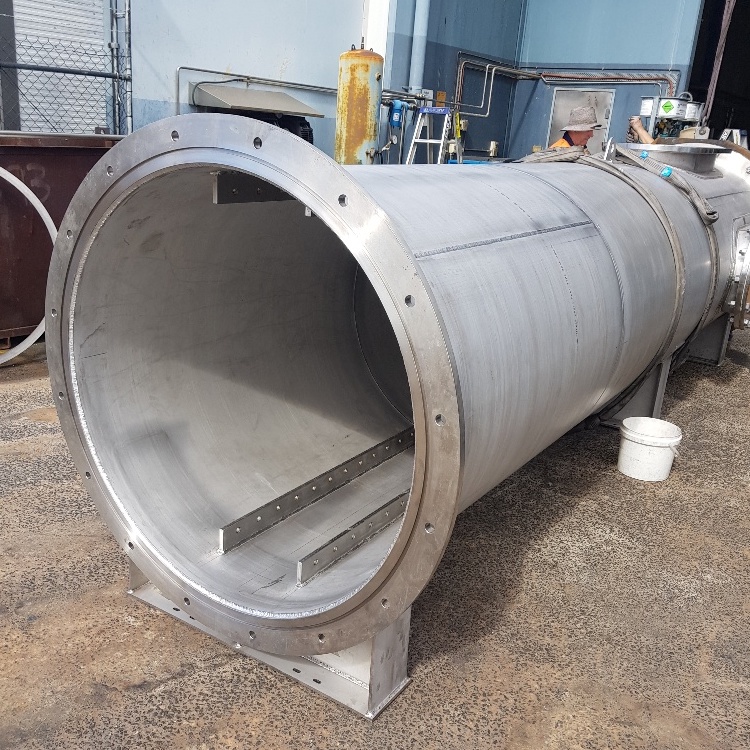
Large horizontal stainless steel vessel in the STA workshop

The Records That Make Inspection Easier

An inspector compares what they find with what was built. Good records from the fabricator are the baseline for every inspection that follows. Every vessel we build ships with a manufacturer’s data report (MDR).

Manufacturer's data reportOne pack that gathers the vessel's build records. Keep it with the plant file for the life of the vessel.
DesignAS 1210 design done in house and verified by a third-party RPEQ, with the drawings that show materials, design pressure and temperature.
Material certificatesTraceable certificates for the plate, pipe and fittings in the pressure boundary, so the inspector knows what grade is in service.
WPS and PQRThe qualified welding procedures used on the vessel. Our procedures are qualified to AS/NZS 3992 and ASME IX, and our welders are qualified to them.
NDT recordsWhat non-destructive testing was done on the welds, where, and the results. A clean starting point makes later changes easy to see.
Pressure test recordsHydrostatic or air test results, witnessed and signed off before the vessel left the workshop.
NameplateDetails on the vessel that tie it back to the drawings, the data report and any registration.
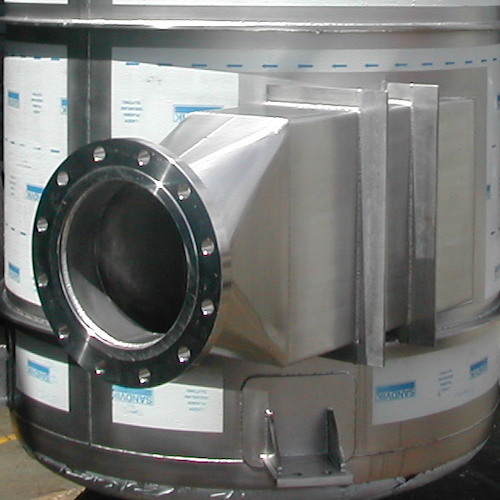
Close-up of a stainless steel flange on a vessel in the STA workshop

What We Do, and What We Do Not

We design, build and test new stainless pressure vessels in our Brisbane workshop. We do not carry out in-service inspections of existing vessels. For periodic inspection under AS/NZS 3788, talk to a competent inspector or inspection body.

Every vessel we build is hydrostatically or air tested and given a pre-delivery inspection in our workshop before it ships. We test with potable council water where possible, and truck in spring or demineralised water when the job requires it. Once the test is witnessed and signed off, the vessel is drained and air dried.

If your project needs independent witnessing of fabrication or testing, we can arrange it through our third-party engineers. You and your inspector are welcome to come to our workshop and witness the test yourselves.

  • New vessels designed, built and tested in our Brisbane workshop
  • Hydro, air and pre-delivery inspection, all in the workshop
  • Independent witnessing arranged through our third-party engineers
  • Customers and their inspectors welcome to witness tests
  • No in-service or on-site inspection

Plan for Inspection When You Buy a New Vessel

Raise these points when you brief a fabricator. They cost little at the design stage and save time at every inspection after.

AccessManway and inspection opening sizes and positions, agreed with whoever will inspect the vessel
InspectorWho will carry out the first in-service inspection, and when
RecordsA full MDR with material certificates, WPS/PQR, NDT and pressure test records
WitnessingWhich fabrication and test stages you, your inspector or a third party want to witness
Relief devicesWho supplies the safety valves or bursting discs, and the set pressures
RegistrationWhether the vessel needs design or item registration in the state where it will be installed
FinishInternal finish and drainability, which affect both cleaning and how easily defects can be seen

Questions About Pressure Vessel Inspection

For anything else, call (07) 3348 9444.

Does STA inspect existing vessels?

No. We design, build and test new stainless pressure vessels in our Brisbane workshop. We do not carry out in-service inspections, on-site testing or inspection reports for existing equipment. For periodic inspection, talk to a competent inspector or inspection body.

How often does a pressure vessel need to be inspected?

It depends on the type of vessel, its condition, its hazard level and your state's rules. AS/NZS 3788 sets typical intervals and allows them to be varied by a documented risk-based assessment. Your inspector sets the schedule.

Who can inspect a pressure vessel?

Generally a competent person with the right qualifications and experience. Depending on the hazard level and your state's rules, some vessels need an inspector from an accredited inspection body. Check with your regulator and insurer.

Can I witness the pressure test on a new vessel?

Yes. You and your inspector are welcome to witness the test at our workshop. If you need independent witnessing of fabrication or testing, we can arrange it through our third-party engineers.

What documents come with a new STA vessel?

Every vessel ships with a manufacturer's data report (MDR). It includes the WPS/PQR, material certificates and NDT records, along with the pressure test records. Labour and workmanship are covered by a 12-month warranty.

Our vessel failed its inspection. Can STA help?

If the vessel needs replacing, yes. We can design and build a new or replacement vessel to AS 1210. Send us the duty, the existing drawings or nameplate details, and any inspection findings that affect the new design.

New and Replacement Vessels

If you are planning a new pressure vessel, or replacing one that has reached the end of its life, send us the duty: product, design pressure and temperature, volume, any jacket duty and the state where it will be installed.

We will design it to AS 1210, have the design verified by a third-party RPEQ, build it in our Brisbane workshop and test it before it ships. We have been an ASSDA Accredited Fabricator since 2009.

  • AS 1210 design, verified by a third-party RPEQ
  • Welders qualified to procedures qualified to AS/NZS 3992 and ASME IX
  • MDR with every vessel
  • 12-month warranty on labour and workmanship
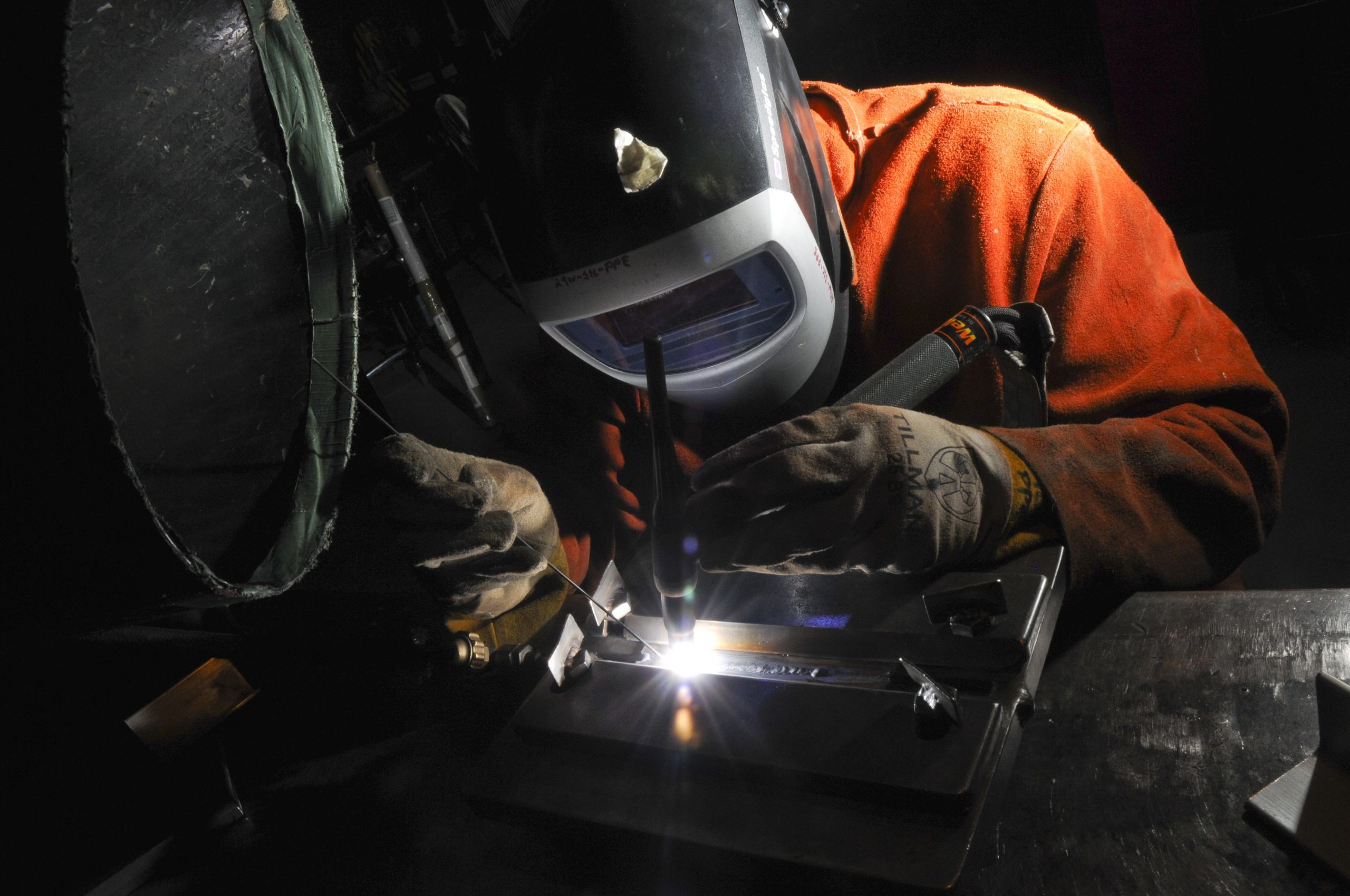
TIG welding stainless steel in the STA workshop
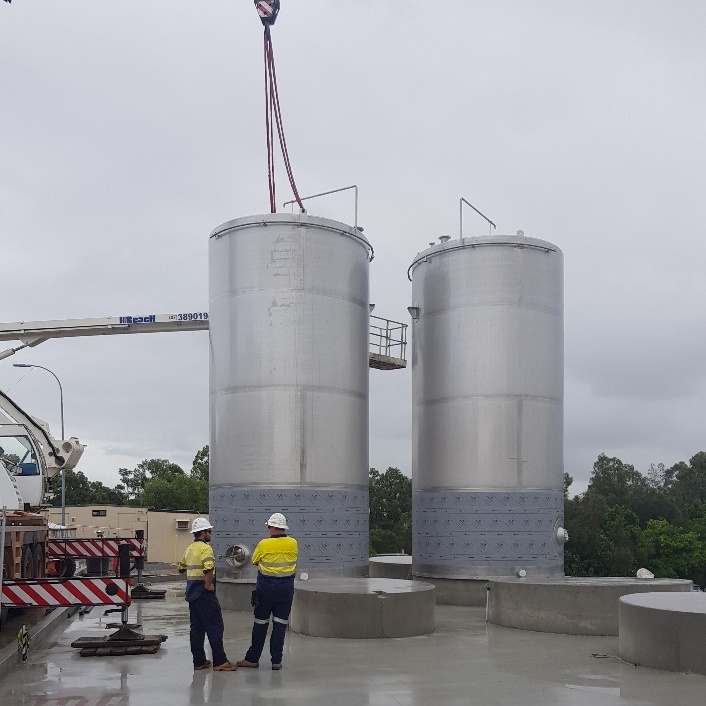
Stainless tanks built by STA

Stainless,
start to finish.

Tell us what you need to store, process or move. Drawings, sketches and rough numbers are all fine.

  1. Send your detailsCapacity, product, site and timing, as much as you know.
  2. We review itOur team checks the design questions and delivery needs.
  3. We send a quoteCovering design, fabrication, testing and delivery.

Or call (07) 3348 9444Mon–Thu 7:00 am–3:30 pm · Fri 7:00 am–1:00 pm

Request a quote